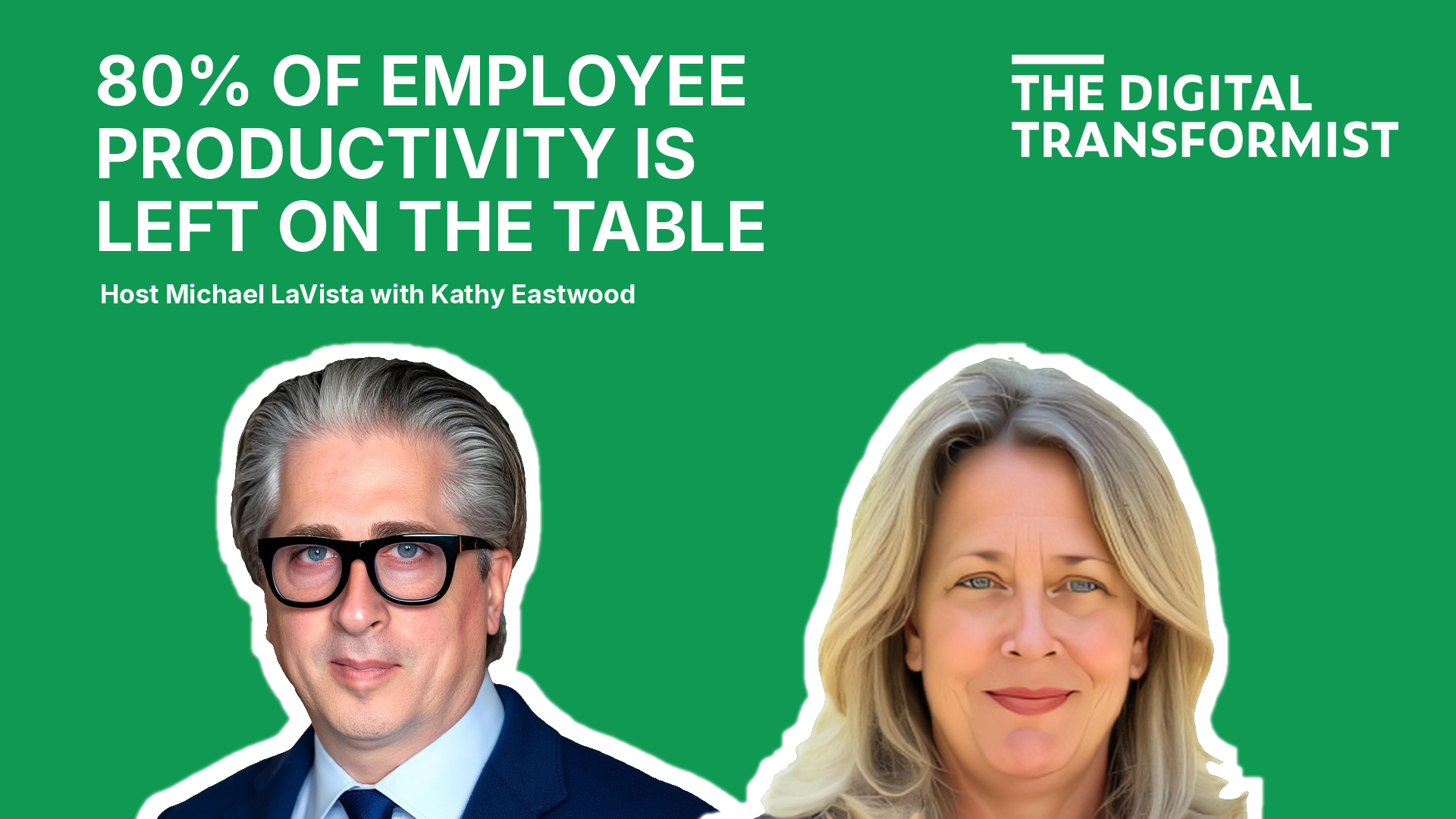
Welcome to The Digital Transformist with Michael LaVista! In this episode, we dive into the complex world of copyrights and AI with our special guest, Hannah Deason, the Chief Operating Officer at Caxy. The conversation delves into the legal and ethical implications of using training material for artificial intelligence, especially in light of recent copyright lawsuits that have rocked the industry.
Hannah sheds light on the evolving landscape of AI regulations, highlighting the challenges faced by businesses and states in navigating the boundaries of fair use and data scraping. The landmark Anthropic case serves as a pivotal moment in redefining the rules of the game, setting a precedent for future copyright disputes in the realm of AI technology.
From the perspective of end-users and creators alike, the discussion explores the potential impact of these legal developments on the accessibility and profitability of AI technology. Will companies like open AI and anthropic be able to adapt to the changing regulatory environment while maintaining their competitive edge? Tune in to learn more about the future of AI and copyright law in this riveting episode of The Digital Transformist!
Listeners can get in touch with the guest, Hannah Deason, by visiting the Caxy website and contacting her on LinkedIn.
Michael can be found at https://caxy.com and his podcast The Digital Transformist https://www.youtube.com/@DigitalTransformistPodcast
Michael's book, Superpowered: 7 Leadership Superpowers Technology Executives Can Use to Grow a More Engaged, Tech-driven and Profitable Organization, can be found on Amazon: https://www.amazon.com/Superpowered-Essential-Leadership-Technology-Executives/dp/1735504904

Here's the SEO-optimized content for The Digital Transformist podcast episode:
Episode Summary
In this thought-provoking episode of The Digital Transformist, host Michael LaVista sits down with Hannah Diesson, Chief Operating Officer at Caxy Interactive, to explore the complex intersection of AI, copyright law, and business innovation. As AI continues to reshape industries, new legal challenges are emerging around data usage, training materials, and copyright infringement that could fundamentally change how businesses leverage artificial intelligence.
Diesson, who is currently studying law while leading operations at Caxy, provides unique insights into recent landmark cases like the Anthropic settlement and explains how evolving state regulations are creating a patchwork of AI governance across the United States. The conversation delves deep into practical implications for both AI companies and end users, while sharing real-world experiences from Caxy's own AI implementation journey. This episode is essential listening for business leaders, developers, and anyone interested in understanding how legal frameworks are evolving to address AI's rapid advancement.
Key Takeaways
- State-by-state AI regulation is creating complexity -- With no federal moratorium on AI regulation, businesses must navigate different rules across states, particularly in Illinois, California, and New York
- The Anthropic settlement sets important precedent -- This landmark case involving millions in payouts and data destruction requirements signals stricter enforcement of copyright protections
- AI excels at editing and gap-finding -- Current AI tools perform best when handling tedious work like code review, sentiment analysis, and identifying bias rather than creative tasks
- Consent requirements are expanding -- Many states now require disclosure when AI is used in video interviews, meeting summaries, and HR decisions
- AI accuracy remains limited for critical decisions -- At 60-70% accuracy rates, AI still carries significant risk for important business choices
- Legal frameworks lag behind innovation -- Courts and regulators are deliberately slow to establish rules, following patterns seen during the dot-com boom
- Data retention compliance faces skepticism -- Questions remain about whether AI companies will truly comply with data destruction requirements or treat fines as cost of business
Notable Quotes
"AI is a really effective tool when we use it as it's been marketed, which is it takes away the tedious work from our lives so humans can do what they do best, which is solve complex problems and be creative."
"Its accuracy is still really low -- it's about 60-70%. That's low for critical decisions, right? Do you want a 30% shot that we're wrong on a critical feature? Probably not."
"Law is slow and it's slow on purpose. There's annoyance to that and also huge help to that, because obviously huge things that seem like they're going to take off can fall overnight."
"Companies that make money on having your data and selling your data -- that's going to be cost of business for them."
About the Guest
Hannah Diesson serves as Chief Operating Officer at Caxy Interactive, where she oversees day-to-day operations while pursuing her law degree. Her unique perspective combines practical business experience with legal expertise, making her particularly well-suited to analyze the evolving regulatory landscape around AI and copyright law. Diesson has been closely following AI litigation developments and their implications for businesses, bringing both operational insight and legal acumen to discussions about technology governance and compliance.
Topics Discussed
- Recent copyright lawsuits against AI companies and the landmark Anthropic settlement
- State versus federal regulation of artificial intelligence technology
- Impact of AI regulations on end users and businesses
- Consent requirements for AI use in interviews and HR processes
- Real-world AI implementation successes and failures at Caxy Interactive
- AI's effectiveness in code review, editing, and bias detection
- Current accuracy limitations of AI for critical business decisions
- Data retention and destruction compliance challenges
- Comparison between AI regulation and historical technology governance
- Future predictions for AI industry legal frameworks
- The role of children's data protection in AI development
- Transformative use doctrine and copyright protection in AI training